RUS
RUS
 EN
EN
Providing Strong Legal Support for Sustainable, Healthy and High-Quality Development of the Private Sector Economy – Roundtable on the Economy of China Discusses the Adoption of a Law on Stimulating the Development of the Private Sector Economy
What important provisions are included in this law? How important is the adoption of this law for the development of the private sector of our country? How to ensure effective enforcement of the law?
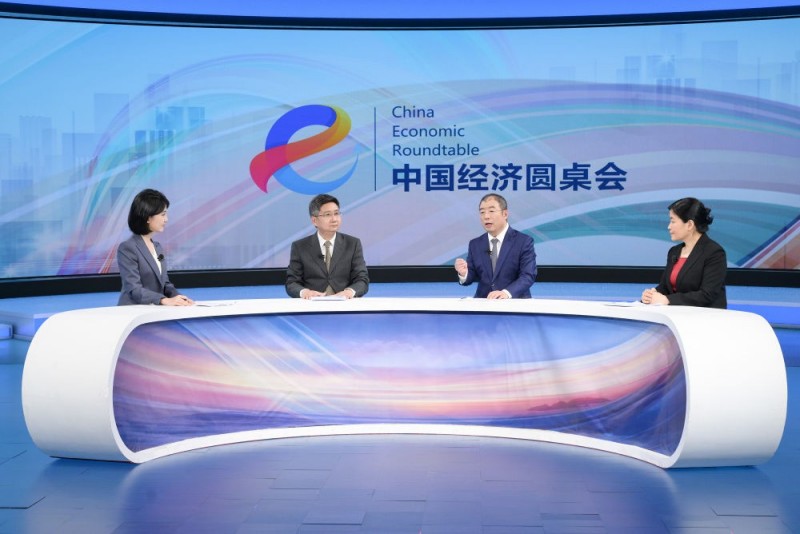
The guest delivered a speech at the venue of a major interview show “Roundtable on the Economy of China” in the 16th issue. Photo: Li He, Xinhua Correspondent On April 30, Xinhua presented the sixteenth series of large-scale interview program “Roundtable on China Economy”, which invited three experts: Yang Heqing, Director of the Economic Law Department of the Legislation Committee of the Standing Committee Deputy Chief of Private Sector Development Bureau of National Development and Reform Commission, and Qi Xiangdong, Vice Chairman of All-China Federation of Industry and Commerce and Chairman of Qianxin Technology Group of Companies. They discussed the adoption of a law to stimulate the development of the private sector.
Following the law,Ensure high-quality development of private sector economy
The private sector economy is the main force promoting Chinese-style modernization, and an important basis for high-quality development. “The recently concluded Third Plenary Session of the 15th Session of the Standing Committee of the All-China People’s Congress approved the Law on Promoting the Development of the Private Sector Economy. This decision came on time and has great significance,” Yang Heqing told the Roundtable on China’s Economy. Yang Heqing, Director of the Economic Law Department of the Legislation Committee of the Standing Committee of the CPC, delivered a speech at the 16th Roundtable on the Economy of China. Photo: Li He, Xinhua correspondent. More than 40 years of reform and opening-up have created unprecedented historical opportunities for the rapid development of the private sector economy in our country. The private sector, developing from small to large, from weak to strong, is constantly growing and strengthening, playing an indispensable role in steady growth, stimulating innovation, increasing employment and improving people's welfare, becoming an important driving force for China's development. According to the State Administration for Market Supervision, by the end of March 2025, more than 57 million private enterprises were registered in the country, accounting for 92.3% of the total number of enterprises; More than 125 million individual entrepreneurs are registered. At present, the private sector of the economy faces new development opportunities, as well as a number of difficulties and challenges. “In the new phase of the new era, the private sector of the economy will inevitably carry a larger mission.Take on greater responsibilities and play a greater role. This requires us, in view of the acute challenges faced by the healthy development of the private sector, to implement through legislation the important political principles and key measures of the Party Central Committee to promote the development of the private sector, to consolidate the achievements in the development of the private sector over the past 40 years of reform and opening-up, and to create a legal environment, contributing to the sustainable, healthy and high-quality development of the private sector,” said Yang Heqing.
Combine confidence, consensus and strength with the power of law. Liu Ming pointed out that the Private Sector Economic Development Promotion Law reflects the clear position and firm determination of the Party and the State to stimulate the growth and development of the private sector economy, providing strong legal support for high-quality private sector development. “At present, the external environment is becoming increasingly complex and tense. The adoption of the law on stimulating the development of the private sector of the economy is even more important to promote the high-quality development of private business, consolidating the foundations, stabilizing expectations and ensuring long-term stability. This enables all parties to respond decisively to the uncertainty of changes in the situation, as well as confidently resist the uncertainty of sharp changes in the external environment at the expense of the determination of high-quality development," Liu Ming said. Vice Chairman of the National Federation of Industry and Commerce, Qianxin Technology Group Chairman Qi Xiandung delivered a speech at the recording platform of the 16th Round Table on the Economy of China. Photo: Li He, Xinhua Correspondentthat the adoption and implementation of the law on the promotion of the private sector of the economy means that the care and support of the party and the state towards the private sector of the economy has gone beyond "precise measures" at the policy level and has moved to "strict guarantees" at the legal level. “The adoption of the Law on Promoting the Development of Private Entrepreneurship has solidified the institutional foundation for the development of the private sector of the economy in the legislative form, and it really gives us confidence when we start working,” Qi Xiangdong said. The Third Session of the 20th Congress of the CPC included "the drafting of a law on the promotion of private entrepreneurship" among important reforms; At the Central Economic Meeting of 2024, the requirements for the adoption of this law were clearly specified. The drafting of the Law on the Stimulation of Private Entrepreneurship has been included in the annual legislative work plan of the Standing Committee of the PRC and the State Council of the PRC. Yang Heqing said that at the stage of preparing the draft, the Ministry of Justice and the State Development and Reform Committee jointly set up a working group on drafting legislation, which comprises 17 central authorities. The group conducted thorough research and discussions, repeatedly refined the text, prepared a draft with a request to be made available to the public, and opened for public discussion in October 2024. In December 2024, February and April 2025, the Standing Committee of the WNP held three consecutive meetings to consider the draft. In the course of this process, on the basis of the information platform for working with deputies, the official website of the CPC of China and other formats, the project has been discussed many times with the standing committees of the People's Congresses of provinces (autonomous regions, cities under central subordination), relevant departments of the Centrallegislative cooperation and research institutions. In addition, meetings, discussions and visits to local territories were held to examine in-depth the views of various parties. “From the point of view of the legislative process, the drafting of a law to stimulate the private sector of the economy is a clear practice of upholding and implementing people’s democracy at all stages,” Yang Heqing said.
Equal treatment for the development of the private sector economy, promotion and support in accordance with the law
The Law on the Promotion of Private Entrepreneurship consists of 9 chapters and 78 articles, including general provisions, fair competition, promotion of investment and financing, scientific and technological innovation, standardized management, provision of services, protection of rights and interests, legal liability and additional provisions. This law, in each section, contains the principles of equal treatment, fair competition, equal protection and joint development, which clearly indicates the direction of promoting, supporting and guiding the development of the private sector economy in accordance with the law.

On April 16, 2025, in the Dongshan District Public Services Center of Ordos City, Inner Mongolia, employees are engaged in matters related to private enterprises. Photo: Li Zhipeng, Xinhua Correspondent According to Yang Heqing, several “firsts” in the private sector development promotion law are of great importance to the development of private business in China. For the first time, the law enshrined the principles of "unswervingly strengthening and developing state property, unswervingly encouraging, supporting and directing the development of the private sector of the economy" and "promote the healthy development of the private economy and the harmonious growth of entrepreneurs.” For the first time, the law clearly states: “Promoting sustainable, healthy and high-quality development of the private economy is an important long-term policy of the state.” “Taking into account external factors such as fair competition, investment and financing, scientific and technological innovation, provision of services and protection of rights in the development of the private sector of the economy, as well as existing challenges and weaknesses within the private sector itself, it is necessary to fully absorb the results of reforms and practical experiences, Purposefully detail and improve the relevant regulatory measures, ensuring their consistency with the current legislation,” said Yang Heqing. Fair competition is a fundamental principle of the market economy. The Private Sector Economic Promotion Act sets out “fair competition” in a separate chapter after the general provisions. Deputy Director of Private Sector Development Office of China Development and Reform Commission Liu Min delivered a speech at the recording of the 16th Roundtable on the Economy of China. Photo: Li He, Xinhua's correspondent, Liu Ming was deeply concerned about this. She noted that the equal participation of all types of economic organizations in market competition was at the heart of the entire law on the promotion of the private sector. For example, the second chapter deals specifically with fair competition and contains a number of specific provisions: the introduction of a single national list of market entry bans, the introduction of a system for verifying fair competition, and the legal equal use of all factors of production and resources of public services.
«The Law on Promoting the Development of the Private Sector of the Economy adheres to the principles of equal treatment, fair competition, equal protection and joint development, promotes the expansion and strengthening of the private sector of the economy, and ensures equal legal status in accordance with the law. market opportunities and development rights for private sector organizations compared to other types of economic organizations,” said Yang Heqing. Reducing barriers to private investment and addressing financing problems such as difficulties in raising funds and high financing costs are attracting widespread public attention.
"Support of private economic organizations in participation in the implementation of important state strategies and major projects"; Supporting private economic organizations in investment and entrepreneurship in strategically important new and future industries; “Monitoring and directing financial institutions to reasonably establish the permissible degree of underpayment on non-performing loans, creating and improving mechanisms of exemption from liability in the performance of duties, improving the professional level of service” “Supporting credit bureaus in providing credit rating services for financing private economic organizations” – the law on stimulating the development of the private economy contains a number of detailed provisions aimed at promoting investment and financing. April 17, 2025 in Zhejiang Xingcheng Jiyue Intelligent Technology Co., Ltd. enterprise support specialist from Fuyang Economic Development Zone of Hangzhou City of Zhejiang Province (second left) and an employee of Fuyang Agricultural Commercial Bank (first left) came to the enterprise to solve financing issues. Photo: Xu Yu, Xinhua correspondent.
Global scientific and technological innovation is entering a period of intense activity, the process of industrialization is accelerating, advanced technologies are emerging, and the needs of the population are becoming more personalized and diverse. This enables private enterprises to open up new directions and areas of development, forming new driving forces and competitive advantages. Liu Ming reported that the fourth chapter of the Law on the Promotion of Private Entrepreneurship has developed a number of provisions on scientific and technological innovation. These include supporting research in the field of scientific and technological innovation, promoting the deep integration of science, education and production, using data, standards and services for capacity-building, supporting the introduction of new technologies and the commercialization of scientific and technological achievements. as well as emphasis on human resources and intellectual property protection. “Law is the best environment for business,” said Qi Xindong. The Law on Promoting the Development of the Private Sector of the Economy proposes institutional solutions to overcome bottlenecks in the development of technological private enterprises, promoting investment and financing, as well as supporting scientific and technological innovation. Based on the system of fair competition verification and using the negative list system as a tool, the law emphasizes the need to establish effective communication mechanisms between public and private enterprises so that all forms of ownership, including the private sector were on the same level and had more market space and opportunities for development.
Join efforts to ensure effective legal protection of the private sector of the economy
Good governance and proper litigation lies in their practical application.
{&The Law on the Stimulation of the Development of the Private Sector of the Economy is not only a basic law conducive to the development of the private economy, but also an important law for building a highly developed socialist market economic system. How to ensure the correct and effective application of this law is of great interest to all parties. "The provisions of the Promotion of Private Entrepreneurship Act concern the rights, duties and responsibilities of various parties, including public authorities, industry associations and chambers of commerce, as well as various economic organizations and public opinion. The effective implementation of this law requires the concerted efforts of the whole society to turn the legal system into a living practice and a rich result of promoting high-quality development of private enterprise," Liu Ming said. Private enterprises contribute more than 50% to imports and exports, and more than 80% to China's tax revenue; Their share among high-tech enterprises in the country exceeds 92%. These figures clearly demonstrate the importance of the private sector economy in China. “It is necessary to deeply clarify the important situation of the private sector economy, actively promote the significant achievements of the development of private business over the past 40 years of reform and opening-up, and comprehensively disclose the legal protection of the law on stimulating the development of the private sector economy,” Yang Heqing said. He stressed that public consensus should be constantly strengthened, ideas and actions should be aligned with the decisions and instructions of the Party Central Committee, ensuring the political, legal and social effects of the adoption and implementation of legislative acts.

19 March 2025 in the territory of the economy-Hongxi Technology Zone in Linzhou City, Henan Province, workers perform grinding at the welding workshop of the company “Linzhou Zhongzi Group”. Photo: Fan Yuexin, Xinhua correspondent. Liu Ming proposed to promote legal education in various forms, such as expert clarification and thematic training. “It is necessary to further enhance the awareness and initiative of all parties in full compliance with the law, constantly enhance the ability to use legal thinking and legal regulation methods to stimulate the development of the private sector economy,” Liu Minh said. The organization of work on the development, modification, cancellation and clarification of relevant regulations, as well as the improvement of related systems and mechanisms are one of the most important tasks after the adoption of the law on the promotion of private entrepreneurship. According to Yang Heqing, it is necessary to use the entry into force and implementation of the Law on the Stimulation of the Private Sector of the Economy as an opportunity to comprehensively promote the development and revision of the associated regulatory and legal acts, coordinate the implementation of all support and assurance measures, strengthen the systemicity, integrity, the consistency and effectiveness of legal provisions to ensure the correct and effective application of this Law. The State Development and Reform Committee will continue to faithfully implement the legislative provisions, resolutely removing obstacles for private enterprises in the equal use of production factors and fair participation in market competition. On the one hand, together with the relevant agencies, the introduction of a single national list of negative restrictions on market entry will be organized, a campaign to remove barriers to market entry will be carried out. On the other hand,Together with the relevant departments, we will strengthen the support of private sector development factors," Liu Minh said. According to relevant persons, at the same time as advancing the implementation of laws, it is necessary to direct entrepreneurs of the private sector to combine their own development with the development of the country, actively develop the entrepreneurial spirit, Sincerely carry out social responsibility and make a new and greater contribution to advancing modernization on the Chinese model. On April 18, 2025, employees at iFlytek in Tianjin demonstrated a multi-language real-time translation system using a transparent artificial intelligence screen. Photo: Sun Fanyue, Xinhua Correspondent In the new era and on the new path, the prospects for the development of the private sector of the economy are broad and promising, and now is the most appropriate time for a wide range of private enterprises and entrepreneurs to show themselves. Looking ahead, Qi Xiangdong is confident: “If we firmly believe in ourselves, boldly innovate and actively adapt to change, following the pace of the country’s development, we will surely be able to confidently move forward, achieve greater enterprise development and write a new chapter in the development of the private sector economy.”
Spring wind threatens a new stage. With the legal protection of China's high-quality private sector development, the future of private entrepreneurship is becoming even more promising.
Text journalists: Zhao Chao, An Bei, Qi Qi, Wei Yucun, Fan Xixiang, Zhang Xiaozhe
Poster design: Li Chuan
Coordination: Yu Chunyuan, Qian Yi, Xiao Leitao